
Computing
At Bledington, we aim to inspire and equip every child to develop the skills to live, work, keep safe and thrive in the increasingly digital world we all inhabit.
Implementation
Our scheme of work follows the National Curriculum, which we have used to generate our progression grid. The curriculum aims to equip young people with the knowledge, skills and understanding they need to thrive in the digital world of today and the future. Our curriculum is split into four stands: coding, connecting, communicating and creating.
- Coding - encompasses all aspects of robotic instructions, from working with Beebots in the Infants to debugging their own algorithms in Year 6.
- Connecting (including Internet Safety) - covers all aspects of how the internet allows greater world wide communications and how to use this in a safe way.
- Communicating - discusses how we can use technology beyond the boundaries of school to enquire, learn and communicate.
- Creating - looks at creating digital art, word processing, spread sheets and presentations.
To deliver this range of skills, Bledington Primary School primarily utilise the National Centre of Computing Education (NCCE) to structure the blocks of learning.
For our block coding we utilise Scratch Junior and Scratch. We supplement this with LOGO academy to enable us to develop our awareness of coding languages. Block coding lessons provide a graphical approach to coding where pupils drag and drop events, objects and actions to make things happen in a program, progressing to building their own games. We also have access to a school set of Micro:bits to allow children in Upper Key Stage 2 to experience how coding can be used on external devices, allowing them to create and modify messages, patterns and the understanding of accelerometers can be used to make a pedometer!
Bledington uses Microsoft Teams as an online learning platform to enable home learning to be set up as well as developing individual and collaborative working within school.
E-Safety and Digital Citizenship
A key part of implementing our computing curriculum is to ensure that the safety of our pupils is paramount. We take online safety very seriously, and we aim to give children the necessary skills to keep themselves safe online. Children have a right to enjoy childhood online, to access safe online spaces and to benefit from all the opportunities that a connected world can bring them, appropriate to their age and stage. Children at Bledington cover these skills within specific computing lessons, during PSHCE Rainbow sessions and within E-safety day in February. Each year the computing learning sets out with an E-safety unit of work to ensure that from the first day term it is at the forefront of the minds of children and staff alike.
To help with our implementation of the computing curriculum we have a variety of hardware available to all teachers, including:
- A class set of laptops and headphones
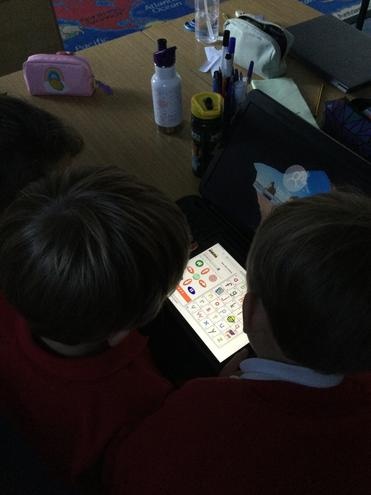
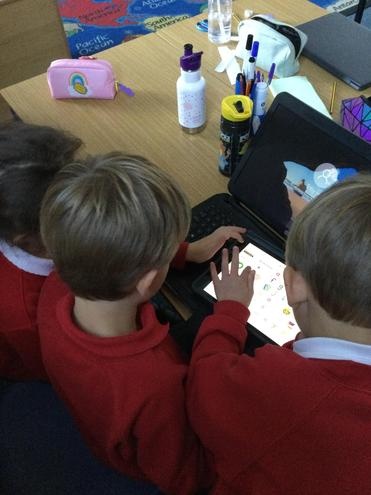
- A range of tablets and iPads
- Fixed laptops for Intervention groups
- Micro:bits
Each classroom is also fitted with interactive panels to enhance learning and bring digital literacy into daily teaching.
Impact
The impact of our curriculum can be seen in pupils developing skills across the years, their confidence to use technology in a range of ways and their ability to speak confidently about keeping themselves and others safe. The impact of our teaching can be seen in the wider community, where families at our school use technology responsibly, in line with the school’s acceptable use policies. Many parents engage with the school’s social media channels to keep up-to-date with developments that are happening in school and the school's digital learning platform is a hive of activity. We measure the impact of our curriculum through regular skills assessments, discussions and conversations with pupils, as well as through looking at the wide range of work available on our collaborative Computing board.
Finding the right balance with technology is key to an effective education and a healthy lifestyle. We feel the way we implement computing helps children realise the need for the right balance and one they can continue to build on in their next stage of education and beyond.